


Practical Steps for Lowering an Athlete’s ACL Injury Risk and Increasing Knee Stability
Explore the science and risk factors behind ACL injuries with Stanford football team doctor Seth Sherman, and learn about injury prevention techniques that can help reduce your risk of tearing an ACL.
June 23, 2026

Seth Sherman, MD
Dr. Seth Sherman is a board-certified orthopedic surgeon specializing in sports medicine and complex knee surgery, and performs research on ACL injury prevention. He is an Associate Professor of Orthopedic Surgery at Stanford University and head team physician for Stanford Cardinal football.


Anterior cruciate ligament (ACL) tears can be devastating injuries for an athlete and have increasingly been in the spotlight.1,2,3 Return to sport can take 9-12 months, involves a grueling surgery, and requires months of rehabilitation.4 Since the ACL is critical to an athlete’s ability to move laterally and change direction, injuries are common in cutting and landing-heavy sports such as soccer, basketball, skiing, and football.5,6,7 Dr. Seth Sherman emphasizes that although ACL injuries are frequent, many are preventable with “proper training and awareness.”
“We don’t have to accept that athletes will inevitably tear their ACLs from simply cutting, pivoting, or landing…If we find the athletes who are most vulnerable through specific testing of their movement patterns, we can train them to reduce their risk of injury,” explains Dr. Sherman. “We have seen firsthand that injury prevention programs can work to reduce risk.”
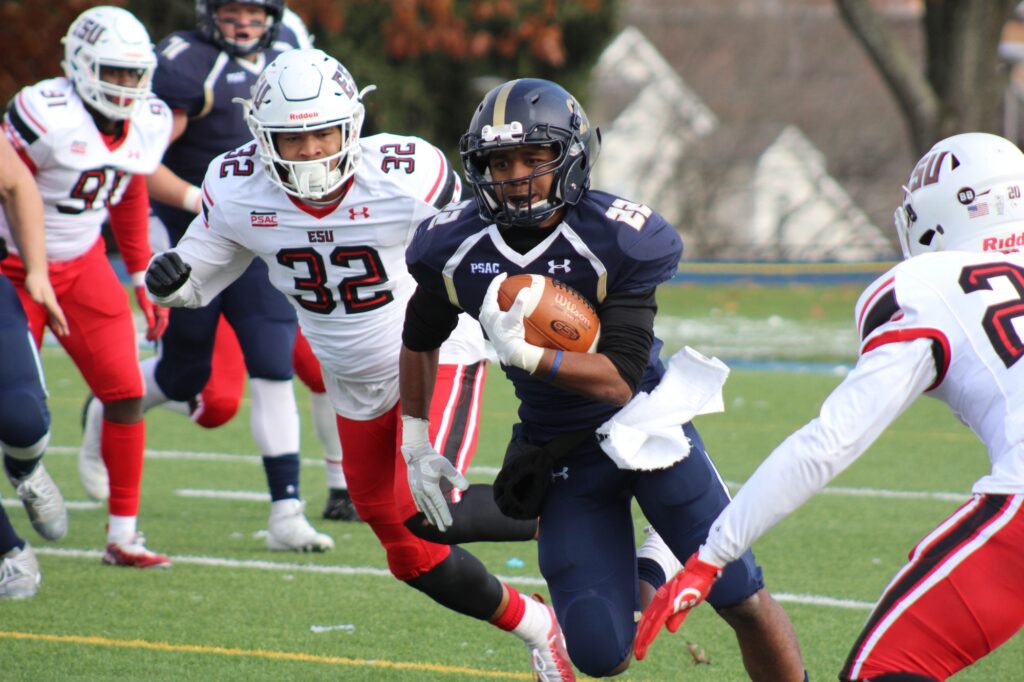
ACL injuries are common in cutting and landing-heavy sports such as football and soccer. Canva Pro Images
Why Some Athletes Are More at Risk
The ACL is a major stabilizing ligament in the knee and connects the femur and tibia—the two major bones in your leg.8 Injuries to this ligament severely impact the knee joint’s ability to withstand loads that occur during movement. Over 50% of ACL injuries in organized, team ball sports occur without direct impact from another player and instead are a result of an athlete moving in ways that place excessive load on the ACL.9 Athletes who exhibit specific movement patterns, such as landing with knee and hips that collapse inward (dynamic valgus) are at a higher risk of injury.10,11
“In general, athletes who can land with excellent limb alignment are not at as much risk for ACL tears,” Dr. Sherman states. “But when their knees buckle inward or their trunk is not centered over the lower extremities, the strain on the ACL increases significantly.”
Cutting sport athletes who have weak hamstring muscles may be at higher risk for ACL tears.12 Hamstring strengthening exercises such as Nordic Hamstring Curls13 can help strengthen hamstrings and are incorporated into several effective ACL tear prevention agility programs.14,15

Training Tip
Ensure your strength and agility training includes practicing proper landing mechanics.16
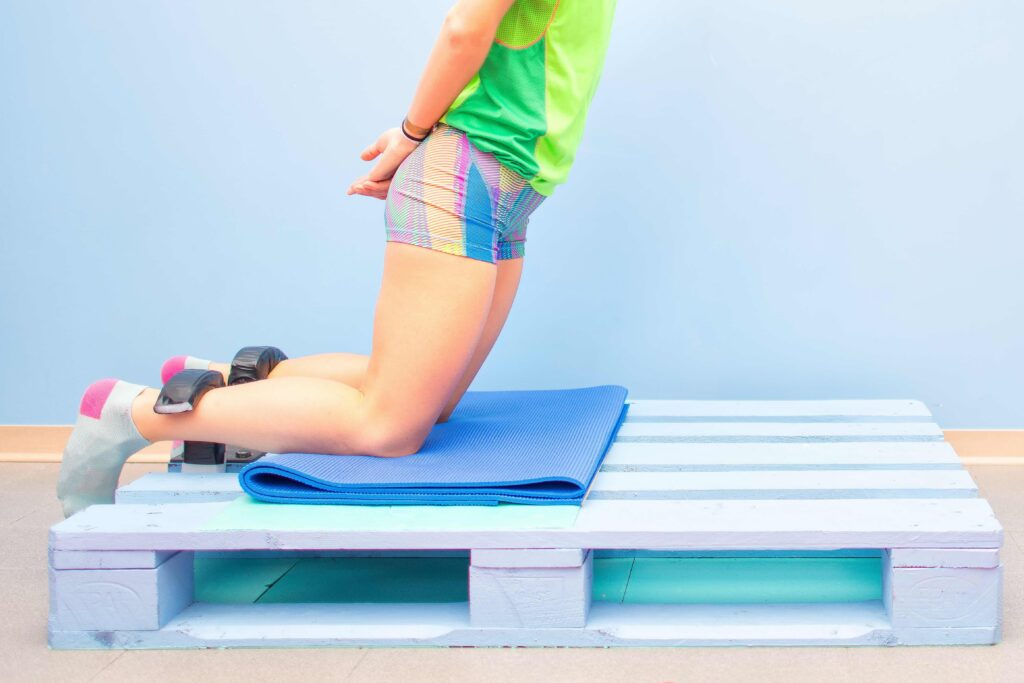
Nordic hamstring exercises can help strengthen hamstrings and are included in several effective ACL tear prevention programs. Adobe Images
Prevention Through Screening and Targeted Training
A first step towards attempting to prevent ACL injuries could be to screen athletes for known modifiable risk factors.17,18 Once identified, athletes could work on correcting their movement patterns through specific exercises designed to improve body alignment, knee stability, and neuromuscular control.
Tried-and-true injury-prevention warm up programs such as FIFA 11+ and PEP incorporate exercises such as single-leg squats, hamstring curls, and jump landings, all designed to strengthen the muscles around the knee and improve coordination. By including these exercises in regular training routines and attending trainings on how to properly supervise them, coaches can help their athletes improve movement patterns and reduce their injury risk.19, 20
Constructive feedback and attention to proper form are important for deriving benefits from these programs. Studies where neuromuscular training has been implemented with little or no feedback have not observed reductions in injuries.21
Training Tip
Consistent practice of knee stability warm-up exercises with oversight and constructive feedback from a coach or athletic trainer can decrease the risk of ACL tears. Make sure to integrate these into every training session!
Consistency Is Key
One of the most critical elements of ACL injury prevention is consistency. Athletes must engage in these programs regularly to see results.19 However, compliance is often a challenge, especially among younger athletes who may not yet recognize the importance of injury prevention.
Dr. Sherman suggests that making these exercises more engaging is essential for increasing adoption. “We need to figure out better ways to increase compliance. Gamifying the process, using apps or interactive platforms, could improve this and make prevention programs more attractive to young athletes,” he notes.

Did You Know?
Athletes who suffer one ACL tear are significantly more likely to experience another ACL injury. 23% of athletes under the age of 25 who return to sport after recovering from an ACL tear will tear the same or opposite knee during their athletic career.22
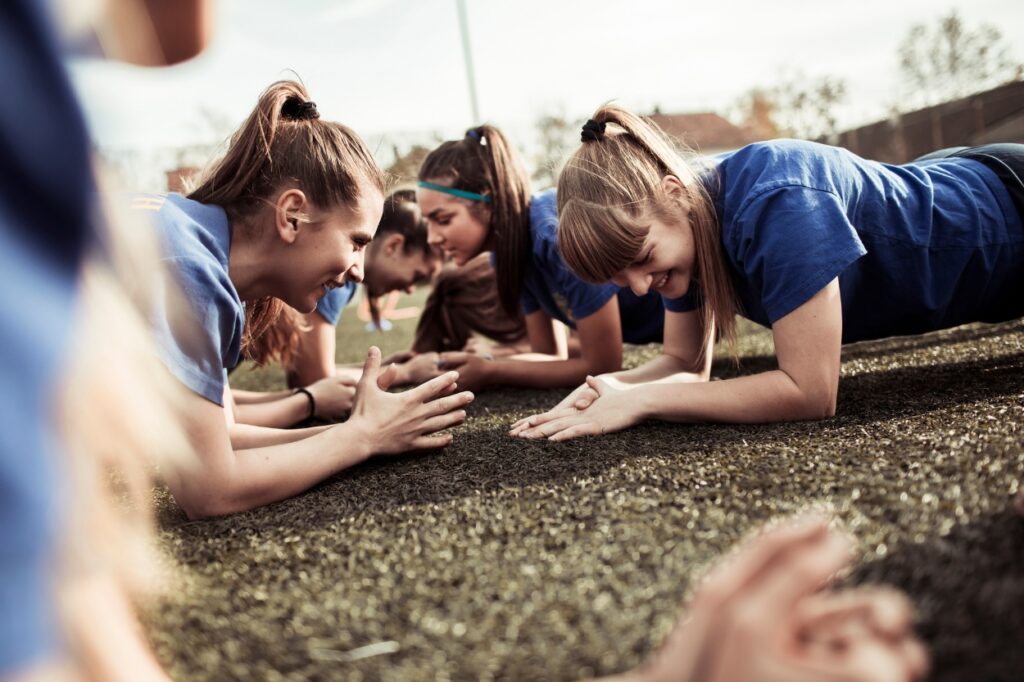
The bench, sometimes also called a plank, is one of the FIFA 11+ exercises for ACL injry prevention. Canva Pro Images
The Importance of Early Intervention
Starting ACL prevention programs early, particularly with youth athletes, is essential. Research has found that intervening during early adolescence can address poor movement mechanics before they lead to injury.16,21
“We should be screening and training young athletes as early as middle school, before they even experience their first injury,” Dr. Sherman says.
Technology’s Role in ACL Injury Prevention
Incorporating technology, such as force plates, wearable devices, and video-based markerless motion capture,23 into ACL tear prevention programs can provide real-time feedback to athletes, helping them adjust their movements before injuries occur. Teams at the professional and collegiate levels are beginning to incorporate these types of biomechanical data collection and motion analysis mechanisms into their regular training to track athletes’ progress and prevent injury.24,25 Dr. Sherman predicts that in the next few years, these technologies will become increasingly accessible, enabling coaches and trainers at all levels to use data to prevent injuries.

Interested in helping in the development of technology for ACL injury prevention?
For athletes who live in the San Francisco Bay Area or travel there for tournaments, you can join Stanford’s study on Smartphone Motion Analysis with Rapid Testing (SMART). The study captures and analyzes smartphone videos to assess how movement patterns relate to peak performance and injury. Learn more
While ACL injuries are prevalent in sports, they are not inevitable. By combining screening, targeted training, and technological tools, athletes can significantly reduce their risk of injury. Dr. Sherman emphasizes the need for consistent engagement with prevention programs, particularly for young athletes and those returning from injury.
Get Deeply Researched Insights on Human Performance
Join our mailing list to get actionable performance tips and nuanced explanations of the science.
Citations
- Levy, M. (2026, February 27). Teenage girl athletes are tearing their ACLs in fast-growing numbers. AP News. https://apnews.com/article/acl-women-girls-soccer-injury-athletes-high-school-b7cf544bfec1ac44e975bbd79d67fdfc
- Togerson, D. (2026, February 10). Here’s how Lindsey Vonn is skiing on a torn ACL in the 2026 Winter Olympics. NBC 7 San Diego. https://www.nbcsandiego.com/olympics/2026-milan-cortina/shes-on-a-rollercoaster-being-dragged-by-her-legs-how-lindsey-vonn-is-skiing-in-the-olympics-on-a-torn-acl/3974492/
- Welch, C. (2026, February 26). Why Are So Many Teen Girls Still Tearing Their A.C.L.s? The New York Times Magazine. https://www.nytimes.com/2026/02/26/magazine/acl-tear-women-girl-sports.html
- Waldron, K., Brown, M., Calderon, A., & Feldman, M. (2022). Anterior cruciate ligament rehabilitation and return to sport: how fast is too fast?. Arthroscopy, sports medicine, and rehabilitation, 4(1), e175-e179. https://doi.org/10.1016/j.asmr.2021.10.027
- Grimm, N. L., Jacobs, J. C., Kim, J., Denney, B. S., & Shea, K. G. (2014). Anterior cruciate ligament and knee injury prevention programs for soccer players. The American Journal of Sports Medicine, 43(8), 2049–2056. https://doi.org/10.1177/0363546514556737
- Mody, K. S., Fletcher, A. N., Akoh, C. C., & Parekh, S. G. (2022). Return to play and performance after anterior cruciate ligament reconstruction in National Football League players. Orthopaedic Journal of Sports Medicine, 10(3). https://doi.org/10.1177/23259671221079637
- Westin, M., Harringe, M. L., Engström, B., Alricsson, M., & Werner, S. (2018). Risk factors for anterior cruciate ligament injury in competitive adolescent alpine skiers. Orthopaedic Journal of Sports Medicine, 6(4). https://doi.org/10.1177/2325967118766830
- Duthon, V. B., Barea, C., Abrassart, S., Fasel, J. H., Fritschy, D., & Ménétrey, J. (2005). Anatomy of the anterior cruciate ligament. Knee Surgery, Sports Traumatology, Arthroscopy, 14(3), 204–213. https://doi.org/10.1007/s00167-005-0679-9
- Chia, L., De Oliveira Silva, D., Whalan, M., McKay, M. J., Sullivan, J., Fuller, C. W., & Pappas, E. (2022). Non-contact Anterior Cruciate Ligament Injury Epidemiology in Team-Ball Sports: A Systematic Review with Meta-analysis by Sex, Age, Sport, Participation Level, and Exposure Type. Sports Medicine, 52(10), 2447–2467. https://doi.org/10.1007/s40279-022-01697-w
- Collings, T. J., Diamond, L. E., Barrett, R. S., Timmins, R. G., Hickey, J. T., Du Moulin, W. S., Williams, M. D., Beerworth, K. A., & Bourne, M. N. (2022). Strength and biomechanical risk factors for noncontact ACL injury in elite female footballers: a prospective study. Medicine & Science in Sports & Exercise, 54(8), 1242–1251. https://doi.org/10.1249/mss.0000000000002908
- Smith, H. C., Vacek, P., Johnson, R. J., Slauterbeck, J. R., Hashemi, J., Shultz, S., & Beynnon, B. D. (2011). Risk factors for anterior cruciate ligament injury. Sports Health a Multidisciplinary Approach, 4(1), 69–78. https://doi.org/10.1177/1941738111428281
- Myer, G. D., Ford, K. R., Foss, K. D. B., Liu, C., Nick, T. G., & Hewett, T. E. (2009). The relationship of hamstrings and quadriceps strength to anterior cruciate ligament injury in female athletes. Clinical Journal of Sport Medicine, 19(1), 3–8. https://doi.org/10.1097/jsm.0b013e318190bddb
- Pollard, C. W., Opar, D. A., Williams, M. D., Bourne, M. N., & Timmins, R. G. (2019). Razor hamstring curl and Nordic hamstring exercise architectural adaptations: Impact of exercise selection and intensity. Scandinavian Journal of Medicine and Science in Sports, 29(5), 706–715. https://doi.org/10.1111/sms.13381
- Petushek, E. J., Sugimoto, D., Stoolmiller, M., Smith, G., & Myer, G. D. (2018). Evidence-Based Best-Practice Guidelines for Preventing Anterior Cruciate Ligament Injuries in Young Female Athletes: A Systematic Review and Meta-analysis. The American Journal of Sports Medicine, 47(7), 1744–1753. https://doi.org/10.1177/0363546518782460
- Silvers-Granelli, H. J., Bizzini, M., Arundale, A., Mandelbaum, B. R., & Snyder-Mackler, L. (2017). Does the FIFA 11+ Injury Prevention program reduce the incidence of ACL injury in male soccer players? Clinical Orthopaedics and Related Research, 475(10), 2447–2455. https://doi.org/10.1007/s11999-017-5342-5
- Thompson, J. A., Tran, A. A., Gatewood, C. T., Shultz, R., Silder, A., Delp, S. L., & Dragoo, J. L. (2016). Biomechanical effects of an injury prevention program in preadolescent female soccer athletes. The American Journal of Sports Medicine, 45(2), 294–301. https://doi.org/10.1177/0363546516669326
- Padua, D. A., Boling, M. C., DiStefano, L. J., Onate, J. A., Beutler, A. I., & Marshall, S. W. (2011). Reliability of the landing error Scoring System-Real Time, a clinical assessment tool of Jump-Landing biomechanics. Journal of Sport Rehabilitation, 20(2), 145–156. https://doi.org/10.1123/jsr.20.2.145
- Mandelbaum, B.R., Silvers, H.J., Watanabe, D.S., et al. (2005). Effectiveness of a Neuromuscular and Proprioceptive Training Program in Preventing ACL Injuries in Female Athletes: 2-Year Follow-Up. The American Journal of Sports Medicine, 33(7), 1003-1010. https://doi.org/10.1177/0363546504272261
- Halvorsen, K. C., Marx, R. G., Wolfe, I., Taber, C., Jivanelli, B., Pearle, A. D., & Ling, D. I. (2022). Higher adherence to anterior cruciate ligament injury prevention programs is associated with lower injury rates: a Meta-Analysis and Meta-Regression. HSS Journal® the Musculoskeletal Journal of Hospital for Special Surgery, 19(2), 154–162. https://doi.org/10.1177/15563316221140860
- Huang, Y., Jung, J., Mulligan, C. M., Oh, J., & Norcross, M. F. (2019b). A majority of anterior cruciate ligament injuries can be prevented by injury prevention programs: A systematic review of randomized controlled trials and Cluster–Randomized Controlled Trials with meta-analysis. The American Journal of Sports Medicine, 48(6), 1505–1515. https://doi.org/10.1177/0363546519870175
- Myer, G. D., Sugimoto, D., Thomas, S., & Hewett, T. E. (2012). The influence of age on the effectiveness of neuromuscular training to reduce anterior cruciate ligament injury in female athletes. The American Journal of Sports Medicine, 41(1), 203–215. https://doi.org/10.1177/0363546512460637
- Wiggins, A. J., Grandhi, R. K., Schneider, D. K., Stanfield, D., Webster, K. E., & Myer, G. D. (2016). Risk of secondary injury in younger athletes after anterior cruciate ligament reconstruction. The American Journal of Sports Medicine, 44(7), 1861–1876. https://doi.org/10.1177/0363546515621554
- Uhlrich, S. D., Falisse, A., Kidziński, Ł., Muccini, J., Ko, M., Chaudhari, A. S., Hicks, J. L., & Delp, S. L. (2023b). OpenCap: Human movement dynamics from smartphone videos. PLoS Computational Biology, 19(10), e1011462. https://doi.org/10.1371/journal.pcbi.1011462
- Lemire, J. (2025, January 9). NBA launching league-wide biomechanics program. Sports Business Journal. https://www.sportsbusinessjournal.com/Articles/2025/01/08/nba-biomechanics-program
- Berg, A. (2024, October 7). How colleges are rethinking weight rooms through design and the implementation of new technologies. Athletic Business. Retrieved February 24, 2025, from https://www.athleticbusiness.com/facilities/fitness/article/15683867/how-colleges-are-rethinking-weight-rooms-through-design-and-the-implementation-of-new-technologies
Explore the Playbook

Muscle Cramps: Debunking Myths About How to Prevent Them
December 18, 2024

Nutritional Tips for Postpartum Athletes Returning to Sport
July 31, 2024
Playbook Terms of Use & Copyright
©2023-2024