
Symposium 2026 | Next-Generation AI for Sport

Next-Generation AI for Sport
Artificial intelligence is opening new frontiers in how we understand and improve movement. This session will showcase AI models of complex athletic movements and highlight how AI can be used to refine peak piano performance and power wearable assistive devices.
CO-MODERATOR
Larissa Fontaine, MS, MBA
Larissa Fontaine is a Cardinal Hall of Fame gymnast and has returned to Stanford University as the Deputy Athletics Director for Olympic Sports and Student-Athlete Success. She spent 20 years in technology at companies like Google and YouTube as a product management and business development executive. At Stanford, she leads efforts to align academics, athletic performance, health and well-being, leadership development, and career readiness into a cohesive system.

CO-MODERATOR
Andrew McCulloch, PhD
Andrew McCulloch is Shu Chien Chancellor’s Endowed Chair in Engineering and Medicine at UC San Diego, where he directs the Institute of Engineering in Medicine and leads the Wu Tsai Human Performance Alliance at UC San Diego. His research focus on multi-scale analysis of the heart and human performance from basic mechanisms to translational applications.

SPEAKER
Kayvon Fatahalian, PhD
Kayvon Fatahalian is an associate professor of computer science at Stanford University. He has spent much of his career working on systems for efficient 3D world modeling and simulation, and was a significant contributor to early work on GPU computing that powers the growth of AI today.

SPEAKER
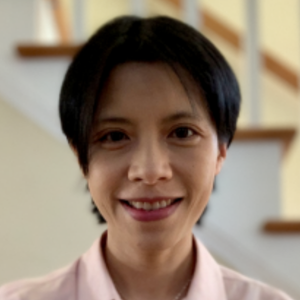
Karen Liu, PhD
C. Karen Liu is an associate professor of computer science at Stanford University. Her research spans computer graphics and robotics, including physics-based animation, character animation, optimal control, reinforcement learning, and computational biomechanics. She has developed computational approaches for modeling realistic human movement and learning control policies for humanoids and assistive robots. She has received an NSF CAREER Award and Alfred P. Sloan Fellowship, was named a Technology Review Innovator Under 35, and has received the ACM SIGGRAPH Significant New Researcher Award.
SPEAKER
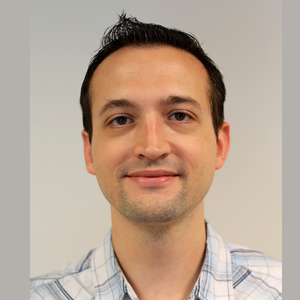
Aaron Young, PhD
Aaron Young is a professor, Woodruff Faculty Fellow, and James R. and Sarah R. Borders Faculty Fellow in the Woodruff School of Mechanical Engineering at Georgia Tech. He directs the Exoskeleton and Prosthetic Intelligent Controls (EPIC) lab, which focuses on lower limb wearable robotic systems. His research combines machine learning/AI, robotics, human biomechanics, and control systems to design wearable robots to improve human capability.
SPEAKER
Rose Yu, PhD
Rose Yu is a professor in the Department of Computer Science and Engineering at UC San Diego, where she leads research in machine learning for large-scale spatiotemporal data with a focus on AI for scientific discovery. Her honors include the Presidential Early Career Award for Scientists and Engineers (PECASE), a DARPA Young Faculty Award, and an NSF CAREER Award. She was named to MIT Technology Review’s Innovators Under 35 in AI and the 2025 Samsung AI Researcher of the Year.

Get Engaged
Join our mailing list to receive the latest information and updates on the Wu Tsai Human Performance Alliance.