
Gold, silver, bronze: a new way to measure research quality in women’s sport
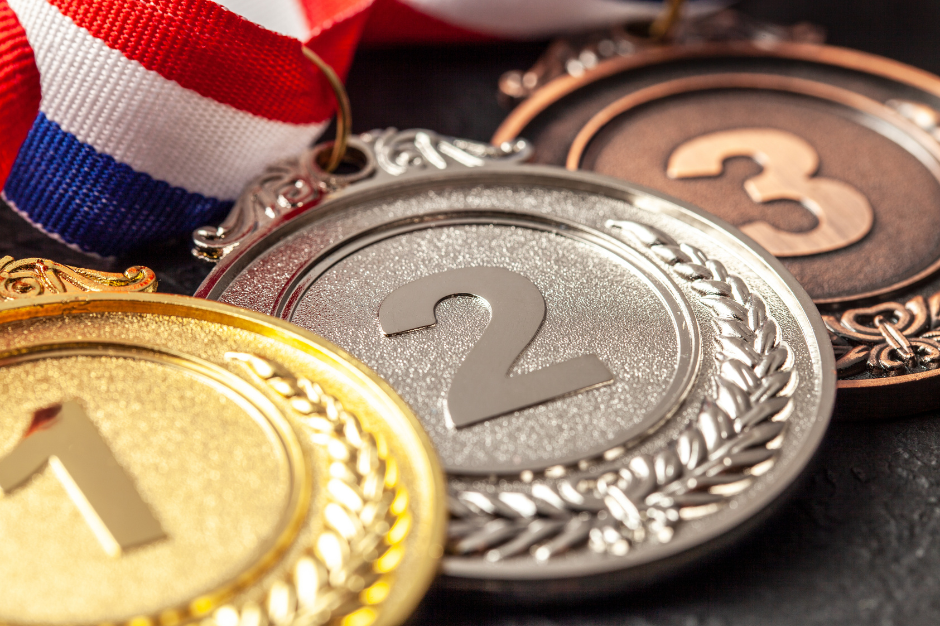
Researchers developed a gold, silver, and bronze rating system to help scientists account for the influence of (ovarian) hormones in their research.
Canva Pro Images
More studies than ever include female athletes. That’s the good news. However, inclusion alone doesn’t guarantee good science, and a growing body of research is only as useful as the methods behind it.
The challenge of studying female athletes starts with hormones. Fluctuations across the menstrual cycle, and the widespread use of hormonal contraceptives, can influence training, performance, and recovery.
The problem is “many of these studies do not use rigorous methods to track or account for ovarian hormone changes,” wrote Wu Tsai Alliance member Louise Burke, Ella Smith, and their team in a new paper published in the International Journal of Sport Nutrition and Exercise Metabolism. “Without this, it is hard to draw strong conclusions about how these hormones may affect performance, recovery, or health.”

At a Glance
More studies than ever include female athletes. Inclusion alone doesn’t guarantee good science.
Ignoring these differences, they warned, risks giving women advice or recommending interventions that are less effective or even counterproductive. Guidelines already exist for how best to classify and measure hormone status in women, yet those methods can be demanding and are not always practical in high-performance sport settings. That burden can discourage researchers from conducting best-practice methods, or from including women in the first place.
Smith and colleagues offer a practical solution: a tiered framework that helps researchers classify and control for ovarian hormone status, even when time and resources are limited. The framework has three levels, which differ in the quality of the hormonal data that is collected.
At a Glance
Want to learn more? Watch the Female Athlete Research Forum | Monitoring Hormones in Female Athletes with Dr. Ella Smith
Gold is the highest standard. For individuals not using hormonal contraception, this level requires blood hormone measurements and data collected across at least two full menstrual cycles. It gives researchers the most complete picture of a participant’s hormonal profile. It is also the most demanding in terms of cost, time, and burden on participants. Gold is essential, for example, when testing for changes across the four menstrual phases.
Silver is the middle tier. It requires ovulation testing in women not on hormonal contraception, for instance with a urine test or wearable device. Blood analysis isn’t needed, but data should be tracked over a single cycle. Silver level studies can confirm whether a participant is ovulating and can distinguish between the follicular and luteal phases, but not all four menstrual phases.
Bronze is the entry level. It requires only calendar tracking of cycle length. There are no blood draws or urine tests. It cannot detect ovulation, menstrual phases, or hormonal irregularities, but it costs nothing extra and still provides useful context about a participant’s cycle.
The authors are clear that Bronze, the entry level, is not a compromise. It is a minimum. Any study including women should be able to meet it. They also note that not every study needs to reach Gold, the highest level. What matters, the authors argue, is that researchers are transparent about which tier they achieved and what that means for how the findings should be interpreted.
At a Glance
Bronze is not a compromise. It is a minimum. Any study including women should be able to meet it.
To make the framework easier to use, the team provides a flowchart to guide researchers through the decision-making process, a participant prescreening questionnaire, and a checklist of information that should be reported in any study including female athletes. Examples from their own research, including cases where they did not reach Gold tier, show how the trade-offs play out in practice.
Ultimately, this new framework provides a path for making quality research on female athletes achievable and ensuring appropriate interpretation of the findings and limitations.
This work is part of the Wu Tsai Human Performance Alliance Female Athlete Program.
Co-authors include Ella Smith, Kirsty Elliott-Sale, Trent Stellingwerff, Rachel Harris, Kathryn Ackerman, and Alannah McKay
Latest News
September 24, 2026
Wu Tsai Human Performance Alliance welcomes Emory Human Performance Institute, expanding Innovation Hub network

September 22, 2026
Alliance Round-Up: REDs risk markers, heat and iron absorption, and more

September 8, 2026
A wearable device tracked over 42,000 menstrual cycles. Here’s what researchers found
Get Engaged
Join our mailing list to receive the latest information and updates on the Wu Tsai Human Performance Alliance.