
Alliance Round-Up: Sleep tracking, menstrual cycle and endurance, and more
Collaborators






Explore the latest Wu Tsai Human Performance Alliance findings
FEMALE ATHLETE
SLEEP
MOLECULAR PHYSIOLOGY
BIOMARKERS
-
-
- A simpler way to track histamine’s role in exercise | View
-
NUTRITION
-
-
- Figure skaters need better support around eating and energy | View
-
MUSCLE
-
-
- Why the Nordic hamstring exercise protects against injury | View
-
Sign up for the Alliance newsletter and have the Round-Up delivered to your inbox.
Does endurance performance vary with the menstrual cycle?
Journal of Applied Physiology | February 2026
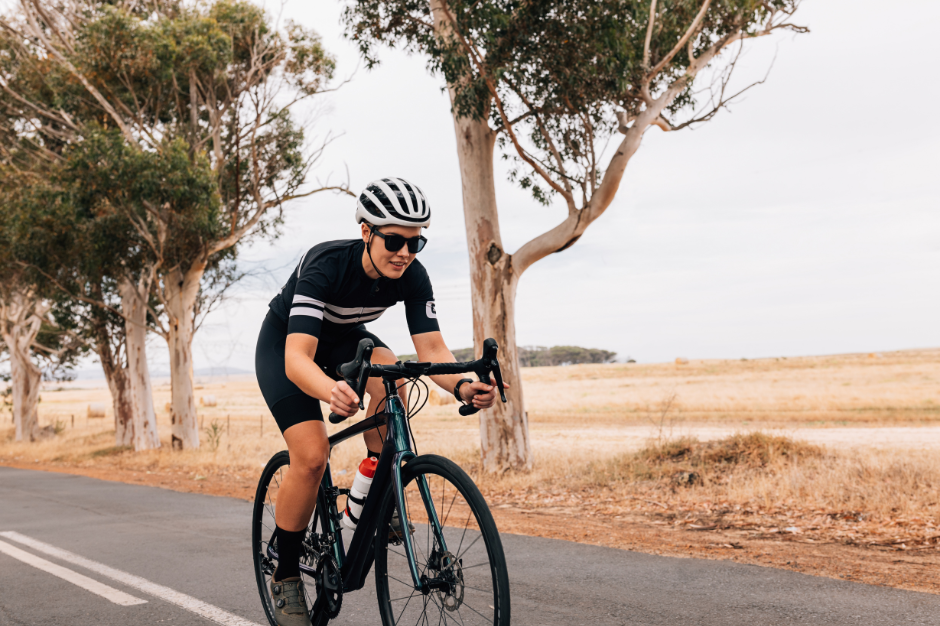
The popular social media trend of cycle-syncing assumes that women’s exercise performance varies significantly across the menstrual cycle as sex hormone levels rise and fall, but new research is providing evidence that may not be the case. Mira Schoeberlein, Brad Wilkins and team followed 30 endurance-trained cyclists (15 women, 15 men) across four cycling sessions, measuring estradiol, progesterone, and testosterone to capture hormonal profiles. They focused on the maximal metabolic steady state, which is the tipping point between sustainable and unsustainable effort. This threshold, when normalized to lean body mass, didn’t differ between men and women, and in women, it didn’t shift with fluctuating hormone levels either. The findings suggest that for trained endurance athletes, sex hormones may not matter for sustainable exercise capacity.
Canva Pro Images
In women’s pro basketball, starters aren’t always the strongest
PLoS One | March 2026
At the professional basketball level, what makes a starter? Raúl Nieto-Acevedo, Dimitrije Cabarkapa and colleagues tested 22 professional female basketball players in Spain’s top league and found no meaningful differences between starters and non-starters on vertical jump or lower-body strength. The one clear distinction was age, with starters being older than their teammates. Starting status appears to be shaped by more than raw strength and power alone, with the authors suggesting factors like experience and skill.
How many nights are needed to measure sleep accurately?
Sleep | February 2026
Most accelerometry-based sleep studies track people for 7 to 14 nights, but new research suggests that isn’t enough time to capture how much someone’s sleep varies from night to night. In a study of more than 10,000 people who wore WHOOP devices for a full year, Josh Leota and Elise Facer-Childs, along with their colleagues, found that while average sleep-related measurements (like typical bedtime or total sleep time) can be reliably assessed in just a few nights, accurately capturing the standard deviation, or the night-to-night variability, takes roughly 40 to 65 nights, depending on the metric.
Canva Pro Images
Which sleep strategies improve athletes’ mental health?
Sports Medicine | January 2026
Athletes face plenty of demands on their sleep, like late games and frequent travel, both of which can take a toll on mental health. Elie Walsh, Elise Facer-Childs and their team reviewed 21 studies of sleep and circadian interventions in athletes, including sleep extension, naps, sleep hygiene, and well-timed light exposure, on their mental health The clearest benefits were for vigour, anxiety, and tension, with less consistent effects on depression, anger, and mood disturbance. The three studies examining napping all found beneficial impacts on mood. Light-based circadian interventions, though less studied, also consistently improved mood and energy levels.
A python’s feasting habits could hold clues for appetite control
Nature Metabolism | March 2026
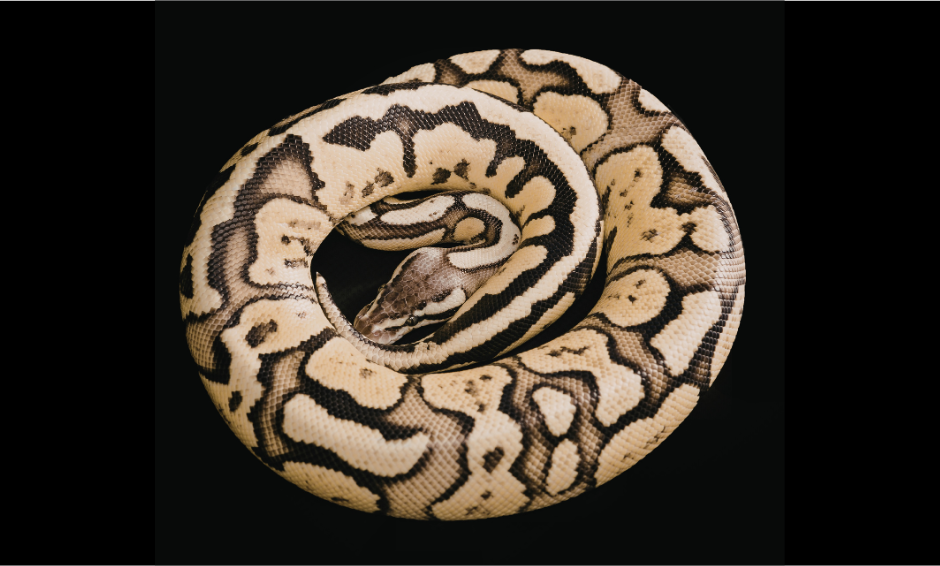
Pythons can eat an enormous meal, then go a year without eating, and new research suggests their extreme biology may hold clues for medicine. Shuke Xiao, Jon Long and colleagues identified a metabolite called pTOS that spikes a thousandfold in pythons’ blood after a large meal. In laboratory mice, the molecule reduced food intake over 28 days, producing effects similar to semaglutide drugs like Ozempic and Wegovy. It’s not the first reptile-inspired medicine: semaglutide itself traces back to a hormone found in the Gila monster.
Learn more: Stanford Medicine, Discover Magazine, The Guardian, CBS News, Nautilus, ZME Science, New York Post, Gizmodo, MSN, The Times, Tech Explorist
Canva Pro Images
A faster platform for studying mitochondrial DNA
PNAS | April 2026
Mitochondrial DNA mutates at a high rate and can drive a wide range of diseases, but studying those mutations has been slow. Weiwei Fan, Ronald Evans and their team have built a faster, scalable platform that can generate many different mutations at once. The team produced a library of 155 mutant cell lines, roughly matching the diversity of known disease-causing mutations in humans, and showed that mitochondrial function is closely tied to early embryonic development. The platform could accelerate not only the search for mitochondrial disease treatments but also our understanding of how mitochondrial DNA variation influences everyday physiology.
Learn more: Salk Institute, Genetic Engineering & Biotechnology News, News-Medical, Technology Networks, Medical Xpress, BioTechniques

Salk Institute
A simpler way to track histamine’s role in exercise
Journal of Applied Physiology | April 2026
Histamine is best known for its role in allergies, but it is also active in exercise, widening blood vessels and increasing blood flow to muscles. Evidence also suggests it may be involved in training adaptations, but studying histamine has been difficult, because it breaks down within minutes. Brandon Gibson, John Halliwill and their team tested whether two of histamine’s longer-lasting breakdown products — 1-methylhistamine and 1-methylimidazole acetic acid — could serve as biomarkers instead. Twelve participants completed a cycling session and a heavy squat session, and levels of both metabolites rose in blood and urine after each. The findings offer a simpler, less invasive way to study histamine’s role in how the body adapts to training.
Figure skaters need better support around eating and energy
Clinical Journal of Sports Medicine | April 2026
Figure skating is known as a sport with a heightened risk for eating disorders, but athlete experiences and awareness of related conditions are still poorly understood. In a survey of 57 adolescent and young adult figure skaters, Mara Tietzen, Kathryn Ackerman, and colleagues found that more than a third screened positive for an eating disorder or disordered eating, and over half had received comments about their body weight or shape, with the two strongly linked. Fewer than 16% had heard of Relative Energy Deficiency in Sport (REDs) or the female athlete triad, two conditions tied to chronically low energy availability. The findings point to a need for better education and support for the figure skating community.
Why the Nordic hamstring exercise protects against injury
Journal of Sport and Health Science | March 2026
Hamstring injuries are common in sports, and the Nordic hamstring exercise is known to help prevent them. New research by Max Andrews, Patricio Pincheira, and team helps explain why. After nine weeks of Nordic hamstring training, participants’ eccentric knee flexor strength rose by about 40%, and their muscle fibers could stretch roughly 25% longer without overstretching the sarcomeres, the tiny units of muscle that generate force. The findings suggest the muscle adapts by adding sarcomeres end-to-end, allowing the hamstrings to produce force across a wider range of lengths and better tolerate the demands of sprinting.
Learn more: Eureka Alert, Bioengineer
Latest News
September 24, 2026
Wu Tsai Human Performance Alliance welcomes Emory Human Performance Institute, expanding Innovation Hub network
September 22, 2026
Alliance Round-Up: REDs risk markers, heat and iron absorption, and more

September 8, 2026
A wearable device tracked over 42,000 menstrual cycles. Here’s what researchers found
Get Engaged
Join our mailing list to receive the latest information and updates on the Wu Tsai Human Performance Alliance.