
Alliance Round-Up: Pre-workout coffee effects on tendons, AI models for running, and more
Collaborators






Explore the latest Wu Tsai Human Performance Alliance findings
TENDONS AND LIGAMENTS
SIMULATION AND MODELING
-
-
- In sprinting, where the foot lands may be key to speed | View
-
REGENERATIVE REHABILITATION
MOVEMENT
MATERIALS SCIENCE
-
-
- New nanoscale material that shifts color and texture may one day monitor performance signals | View
-
Sign up for the Alliance newsletter and have the Round-Up delivered to your inbox.
High doses of caffeine might come with a tradeoff for muscles and tendons
Journal of Applied Physiology | December 2025
Caffeine is one of the most popular performance boosters in sports, so Danielle Steffen, Keith Baar, and colleagues wanted to know what high, continuous doses of caffeine does to muscles and tendons. In cell culture, they found muscle and tendon cells have lower protein synthesis with caffeine. Lab-grown human ligaments exposed to caffeine produced less collagen and were about 45% weaker than those grown without it. In mice given running wheels and a moderately high dose of caffeine (roughly equivalent to a peak of 5.7 mg/kg in humans or 388 mg for a 150-pound individual) over 6 weeks, skeletal muscle mass gains were blunted compared to exercising mice that drank plain water. The findings suggest that while caffeine can sharpen performance in the short term, heavy chronic use could dampen the tissue-level adaptations typically observed with exercise.
Learn more: UC Davis Blog
The study is part of a Wu Tsai Human Performance Alliance Agility Project.

Canva Pro Images
Study suggests how eccentric resistance exercises might strengthen tendons
American Journal of Physiology-Cell Physiology | December 2025
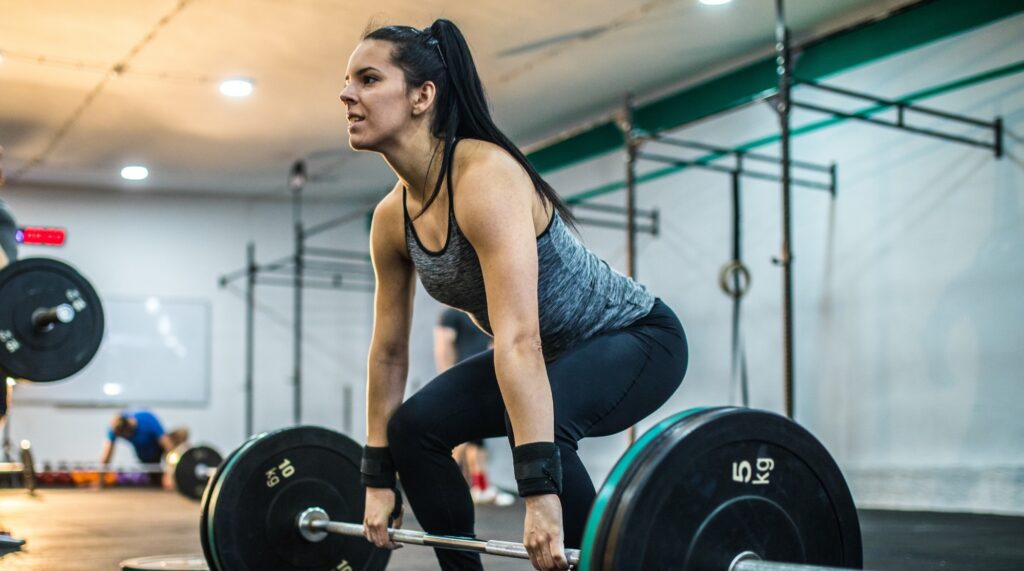
Athletes who regularly do eccentric exercises, like lowering from a pull-up or controlling a deadlift on the way down, tend to have thicker tendons and fewer injuries. But no one knows why. A study led by Ask Møbjerg, Ching-Yang Chloé Yeung, and team found a clue: just four hours after a workout, cells in the tissues surrounding tendons, rather than in the tendons themselves, had already switched on genes for proteins that help tendons slide smoothly and resist damage. Notably, this happened in exactly the areas where injuries tend to occur.
Learn more: Wu Tsai Human Performance Alliance news story
The study is part of a Wu Tsai Human Performance Alliance Agility Project.
Canva Pro Images
In sprinting, where the foot lands may be key to speed
Medicine & Science in Sports & Exercise | September 2025
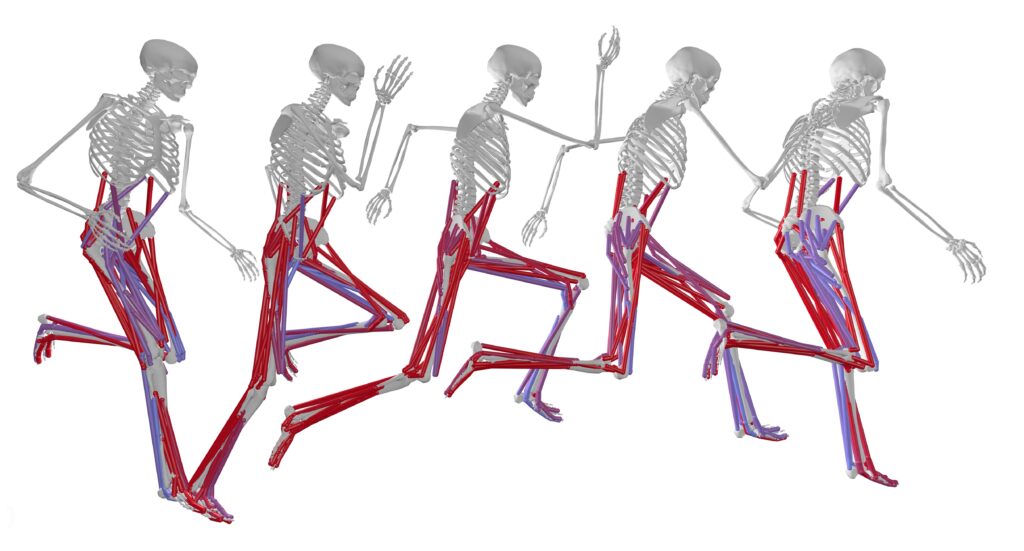
In elite sprinting and high-speed sports like soccer, fractions of a seconds can make the difference between a podium and going home. A simulation study from Nicos Haralabidis, Jennifer Hicks, and colleagues suggests one detail may matter more than others: horizontal touchdown distance, or where the foot lands relative to the body’s center of mass. Using a computer model based on an international-level male sprinter, the team found that shortening this distance by just 6 cm reduced speed by 7.3%. Interestingly, inter-knee distance at touchdown, another metric coaches often monitor, had little effect.
Learn more: Wu Tsai Human Performance Alliance news story
This study is part of the Wu Tsai Human Performance Alliance Digital Athlete Moonshot.
Nicos Haralabidis
Why your face heals scars better than your back – and what could change that
Cell | January 2026
Surgeons have long noticed that cuts on the face tend to heal with less scarring than wounds elsewhere on the body, but the reason was unclear. Michelle Griffin, Michael Longaker, and team traced the difference to the origin of skin cells. Skin on the face is developmentally unique, tracing back to a type of early embryonic cell called a neural crest cell. The scar-forming cells that come from this lineage tend to heal in a more regenerative way. The team found that these facial cells naturally suppress a protein called EP300, which is what turns on scarring genes elsewhere in the body. When the researchers gave mice a single dose of a small molecule that blocks EP300, back wounds healed like facial wounds, with reduced scarring and even some hair follicle regeneration.The findings suggest it may be possible to nudge skin cells toward a less scarring-prone state, opening a potential path toward new therapies.
Learn more: Stanford Medicine
This study is part of the Wu Tsai Human Performance Alliance Regenerative Rehabilitation Moonshot.
Growing blood vessels in a dish: why oxygen and temperature timing matter more than we thought
Tissue Engineering Part A | August 2025
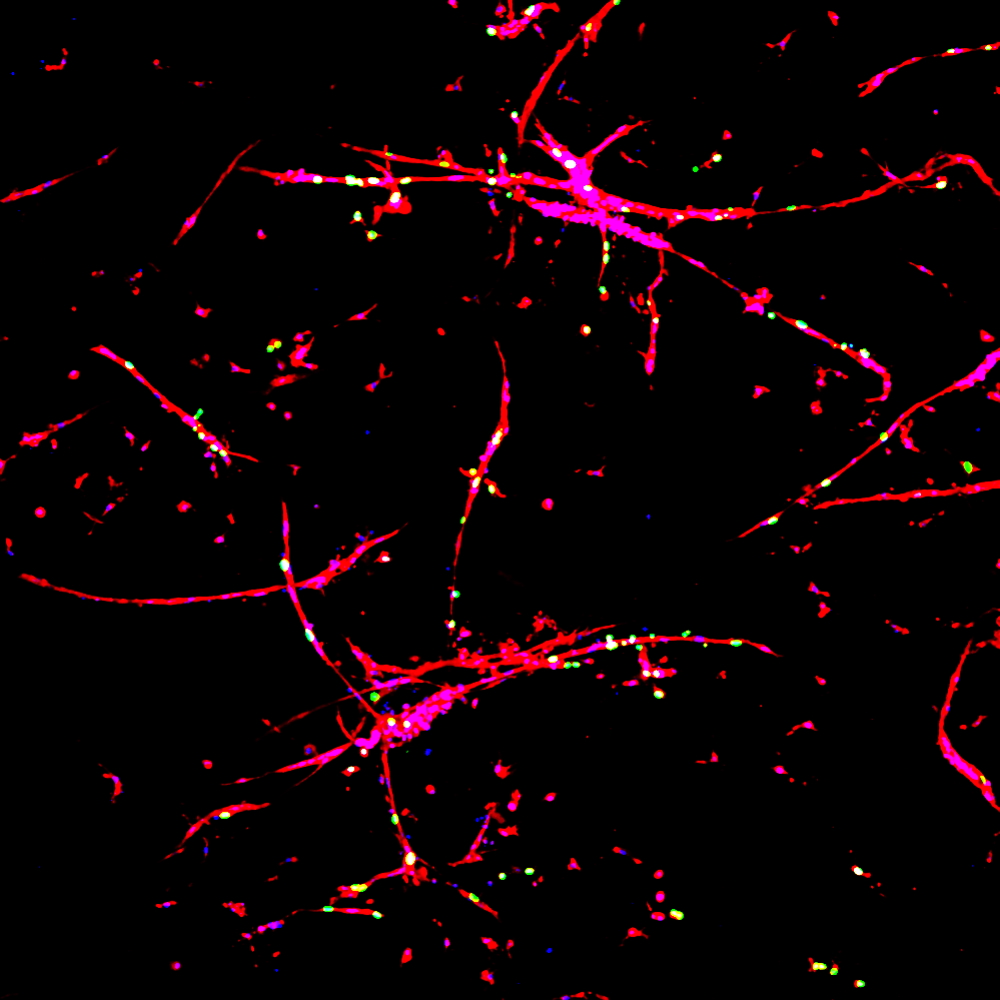
Restoring blood supply to damaged tissue remains a central challenge in regenerative medicine. Samuel Nightheart, Robert Guldberg, and colleagues grew tiny blood vessel fragments in collagen hydrogels to test how changes in oxygen levels and temperature affect new vessel formation. They found that the growth response depends on both the timing of these shifts and how much conditions stray from normal. The findings suggest therapies may need to account for the changing environment of a healing wound.
Learn more: University of Oregon news story
This study is part of the Wu Tsai Human Performance Alliance Regenerative Rehabilitation Moonshot.
Sam Nightheart
Comparison of lower-body neuromuscular performance between 100 and 400 meter Olympic sprinters
Frontiers in Sports and Active Living | September 2025
What separates a 100-meter sprinter from a 400-meter sprinter beyond race distance? Dimitrije Cabarkapa, Andrew Fry, and team used force plate analysis of countermovement jumps to compare lower-body neuromuscular characteristics in 14 female Olympic sprinters. The 100-meter athletes produced greater power and velocity during the propulsive phase of the jump and achieved higher jump heights than their 400 meter counterparts. Both groups showed low asymmetry between left and right limb forces. The findings suggest 100-meter sprinters may benefit from explosive power training, while 400-meter sprinters may need to combine speed work with strength-endurance development.
This work is part of the Wu Tsai Human Performance Alliance Innovation Hubs.

Canva Pro Images
Your body uses different tricks to pick up speed running uphill and downhill
Scientific Reports | September 2025
What changes when you try to run faster on a hill? Rachel Robinson, Michael Hahn, and colleagues had 12 recreational runners run on level ground, a 7.5° uphill, and a 7.5° downhill at three speeds based on their 5k pace. To pick up speed on an uphill, the runners relied more on increasing step frequency, which demanded more energy from their hip flexors (the muscles at the front of the hip that lift the thigh) and knee flexors (primarily the hamstrings, along the back of the thigh). Going faster downhill required less swing-phase energy than flat running. The findings suggest runners training on hilly terrain may benefit from hip and knee flexor strengthening, and that athletes returning from hamstring or hip flexor injuries should reserve faster uphill running for later stages of rehab.
Learn more: University of Oregon – Knight Campus video
This work is part of the Wu Tsai Human Performance Alliance Innovation Hubs.
New nanoscale material that shifts color and texture may one day monitor performance signals
Nature | January 2026
A new nanoscale film can shift both its color and surface texture in seconds. Siddharth Doshi, Mark Brongersma, and colleagues developed a nanoscale, flexible material that replicates one of nature’s tricks: the rapid camouflage abilities of octopuses and cuttlefish. Both properties can be tuned at scales finer than a human hair. Dubbed “soft photonic skins,” the technology could lead to applications like dynamic camouflage for soft robots or wearable sensors that detect chemicals in sweat.
Learn more: Wu Tsai Human Performance Alliance news story, Stanford Report, Discover Magazine, C&EN, ZME Science, Earth, Smithsonian
The study is part of a Wu Tsai Human Performance Alliance Fellowship.

Siddharth Doshi
Latest News
September 24, 2026
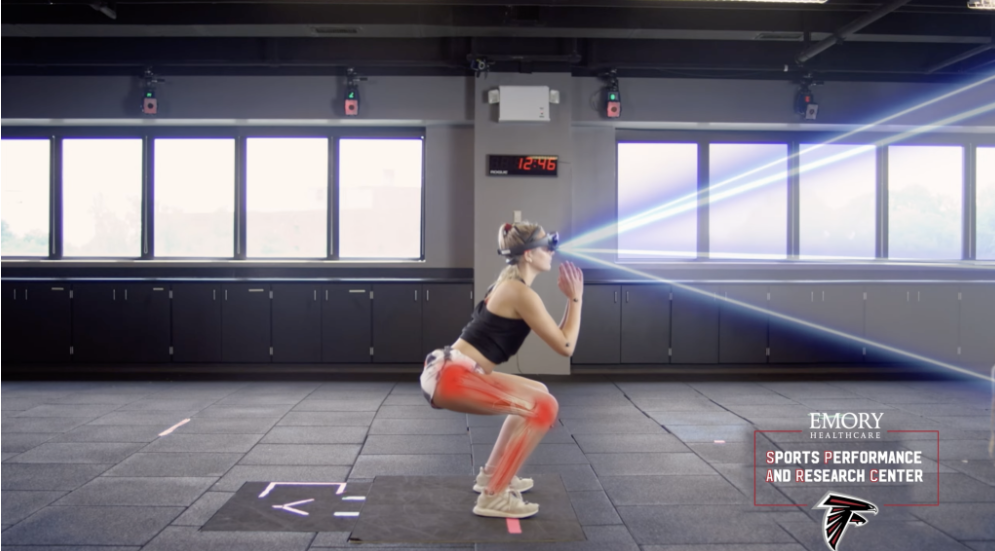
Wu Tsai Human Performance Alliance welcomes Emory Human Performance Institute, expanding Innovation Hub network
September 22, 2026
Alliance Round-Up: REDs risk markers, heat and iron absorption, and more

September 8, 2026
A wearable device tracked over 42,000 menstrual cycles. Here’s what researchers found
Get Engaged
Join our mailing list to receive the latest information and updates on the Wu Tsai Human Performance Alliance.